
What are the best Wearables/ Fitness Trackers 2026
It’s time to discuss the question I get asked the most…
“Which fitness tracker is the best?”
And my answer usually disappoints people...because I usually say…
“What for? What are your goals?”
Now, instead of being able to simply buy something quickly and make a fast-and-feel-good purchase, that person has to pause and think:
“Wait… what do I actually want this for?”
You might be:
Curious about your sleep and want better insight into your recovery
Starting a new exercise routine and want accountability
Trying to improve your cardiovascular health and track your heart rate
Realising you don’t move much and want to increase your daily activity
Whatever your reason, here’s a simple way to think about it:
“I am tracking X, to improve X. I will know I’ve improved because X.”
For example:
I am tracking my steps to improve my overall fitness → I’ll know it’s working when my step count increases and walking feels easier
I am tracking my sleep to improve my recovery and energy → I’ll know it’s working when I wake up feeling more refreshed
I am tracking my heart rate to improve my cardiovascular health → I’ll know it’s working when my resting heart rate decreases over time
Trying to do EVERYTHING well means you will do nothing all that well. So choose 1 thing to focus on to start.
So which tracker should you actually get?
Before you choose, ask yourself 3 simple questions:
How do I want to wear it? Ring, wrist band, full watch with a screen, chest strap, bicep strap...this matters more than you think. If it’s not comfortable, you won’t wear it. As a fitness coach, I want a screen I can see in real time, so I can use it for teaching too! Plus, when I am at the gym, I want to see my heart rate as I am doing the activity, so I can work in certain heart rate zones for my goals.
How much am I willing to spend? Most trackers fall somewhere between £60 and £500+ and some (like WHOOP or Oura) include ongoing subscription costs. Those costs massively add up, so it's worth considering.
How do I want to see my data? Do I want real-time feedback on my wrist, or am I happy reviewing everything later on my phone? This depends on your goal.
Is it comfortable to sleep in? Do I need that data to inform other data points? If you are using it for stress management or activity readiness, you have to sleep in it to get an accurate score.
Once you’re clear on those, the decision becomes much easier.
Things to bear in mind…
Most trackers are waterproof to a certain depth- but the straps can stay damp and uncomfortable, especially with daily wear. Worth considering.
Almost all fitness trackers are not medical-grade, so there will always be a margin of error (at least until we get under-the-skin trackers… which are probably coming).
Fitness trackers can become counterproductive for some people. If you have a tendency toward obsessive behaviour, over-competitiveness, or sensitivity around performance metrics, they may do more harm than good.
I think trackers can be incredibly useful in the short term, but constantly checking and relying on them over time can actually disconnect you from your body, rather than bring you closer to it.
So, shall we get into the nitty gritty?
For accuracy and great all-round performance…
This is what I recommend for most serious training:
Very strong GPS and heart rate accuracy
Excellent for running, cycling, and structured workouts
No subscription (huge plus long-term)
Best for: people who train regularly and care about performance.
For coaching insights alongside the data…
This doesn’t even have a screen-but that’s the point.
It tells you:
How recovered you are
How hard to train
When to rest
Downside: ~£229/year subscription
Upside: arguably the best behaviour-changing insights
Best for sleep & recovery…
Extremely comfortable (you’ll forget you’re wearing it)
Industry-leading sleep tracking
Great for spotting patterns in stress and recovery
Best for: improving sleep, energy, and lifestyle habits
If you love data & structured training…
Deep physiological metrics (VO2 max, training load, etc.)
Built for performance, not lifestyle fluff
Used by top athletes all over the world
Lab tested heart rate monitoring
Best for: analytical athletes
Side note: If you ONLY want to track your heart rate during exercise (not day to day life) grab a polar chest strap. They have the best accuracy on the market AND they are comfortable for most sports activities and affordable.
Some other considerations you might want to check when you have narrowed down your decision:
Do you want to be able to play music/ take calls from your wearable device?
Do you want to be able to pay using your wearable device?
How many days battery life are there?
Some wearables are not as waterproof as they claim 👀
Yes, these may be small things but they add up when you use the watch over time.
And remember, it’s only worth paying the money for the extra features IF they are part of your goals.
Paying more for data you won’t use doesn’t make much sense.
So if you just want to track steps for example, perhaps none of the below are suitable and you might choose a very cost-efficient step tracker!
See below a handy comparison table. (Info as correct as it can be as of April 2026). I added in some other popular options, that I haven’t mentioned above…
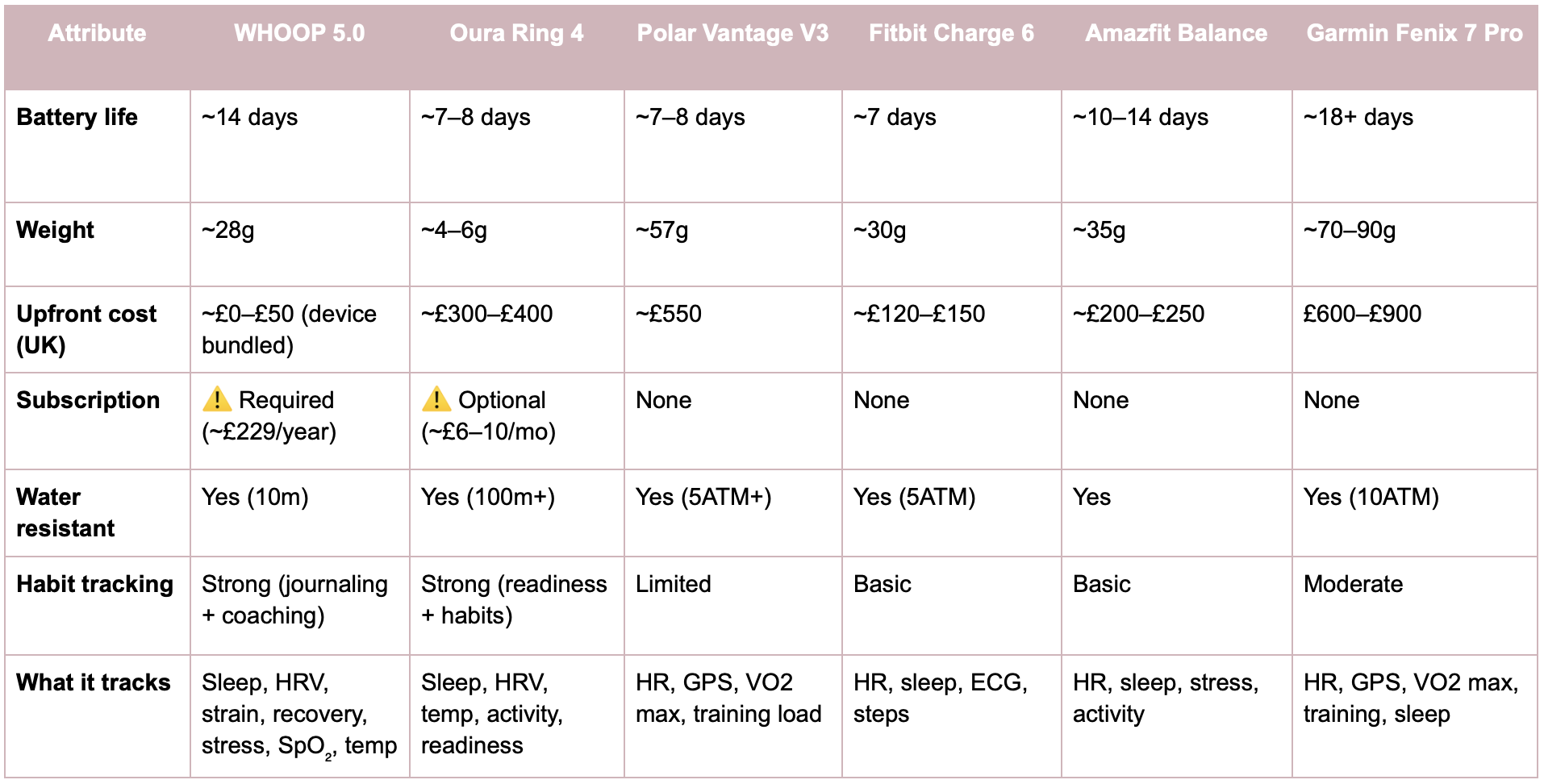
If you have any questions about which wearable to choose, what is best for you or how to achieve your goals, you can join my PT waitlist by emailing info@bodybondonline.com.
And remember, listening to your body without technology is ALSO incredibly useful too. 🙌